


Moving Large Furniture Through Narrow Ottawa Apartment Hallways: A Practical Guide
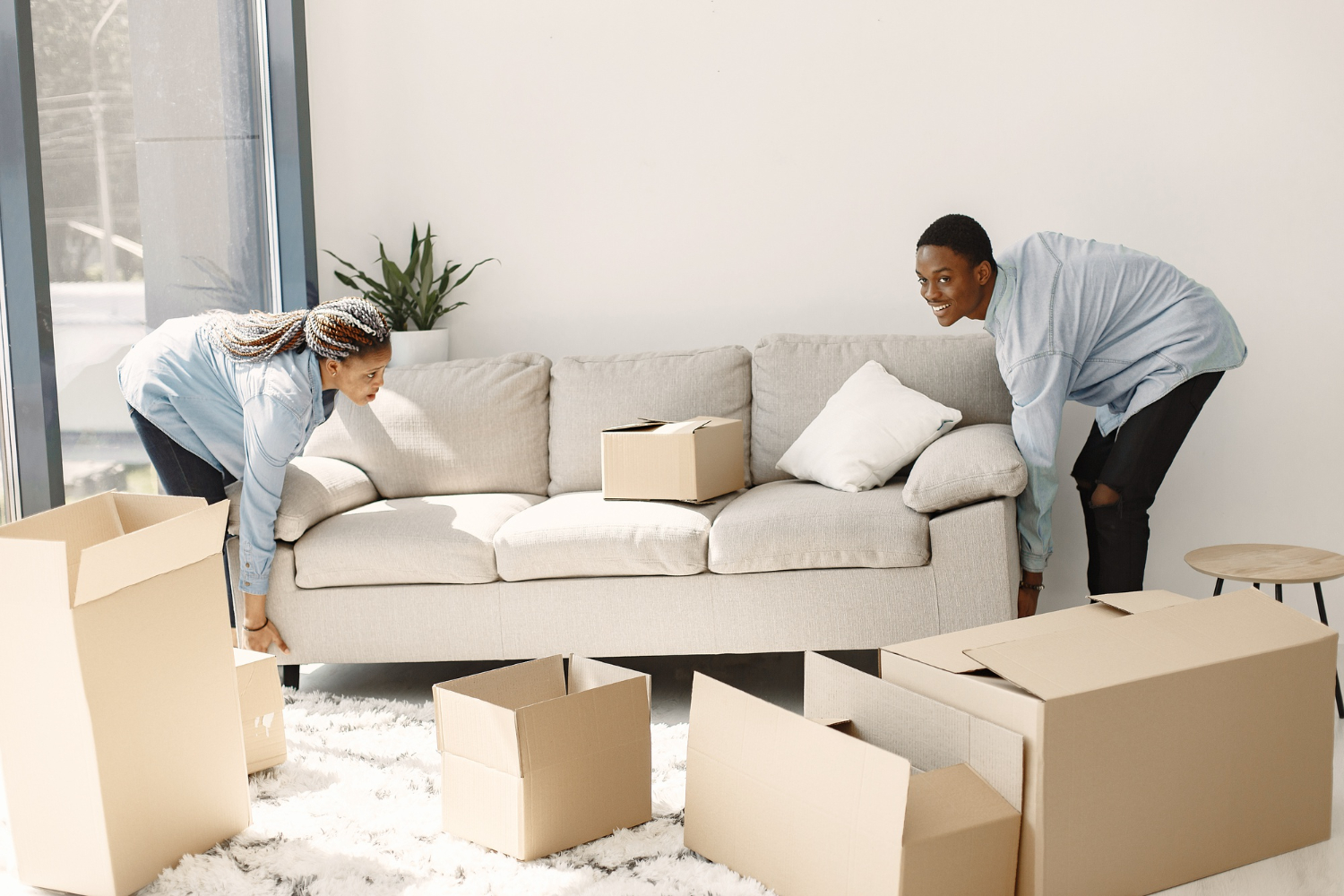
The sectional sofa that fit perfectly into your Centretown apartment was purchased after you moved in. The question nobody asked at the time was whether it would come back out again. In Ottawa's older walk-up apartments — the converted rowhouses in the Glebe, the four-storey walk-ups in Sandy Hill, the Victorian-era buildings on Somerset Street West — doorways, stairwells, and hallways were built for 1910 furniture, not 2025 sectionals. Knowing your measurements and your options before the truck arrives is the difference between a solved puzzle and a panicked phone call to a hoisting company.
Start With Measurements: Every Room, Every Passage
The baseline measurements for any Ottawa apartment move involving large furniture are:
- Doorway width: Standard interior door frame in Canada is 32 inches (81 cm) clear opening. Older Ottawa buildings — pre-1970 construction in Centretown, Sandy Hill, Lowertown — frequently have 30-inch or even 28-inch clear openings in interior rooms. Newer buildings (post-2000) in Westboro, Barrhaven, or Kanata typically offer 34–36 inch clear openings.
- Hallway width: Older Ottawa walk-up apartment corridors run 36–42 inches (91–107 cm). Newer condominium towers typically have 48-inch (122 cm) or wider corridors. The minimum width to navigate a standard 3-seat sofa (typically 85–96 inches long) on its end around a corner is approximately 42 inches of clear hallway — right at the edge of what older Ottawa buildings provide.
- Stairwell width and turn radius: The stairwell width matters less than the landing dimensions. Measure the width of the stair flight and the length of the landing at each turn. A standard Canadian interior stair flight is 36 inches wide; stair landings in older Ottawa walk-ups may be as shallow as 48 inches — making a 90-degree turn with a 7-foot bookshelf a genuine engineering problem.
- Door frame height: Standard is 80 inches (6 ft 8 in), but older buildings sometimes have 78-inch frames. Measure armoire and wardrobe heights against every doorframe on the route.
Measure every passage on the complete route from where the piece currently sits to where the truck is parked — every turn, every doorway, every flight of stairs. Do this before booking movers, not on move day.
The "Book Method" for Navigating Sofas Around Corners
The most commonly encountered furniture-navigation problem in Ottawa apartments is moving a standard 3-seat sofa around a 90-degree corner in a hallway or stairwell. The "book method" (also called the pivot method or the Friends method, colloquially) is the solution most professional movers apply instinctively:
Stand the sofa on its end so it is oriented vertically (back panel facing the wall, seat cushions pointing toward the ceiling). This reduces the sofa's footprint in the horizontal plane from its full length to approximately its depth (usually 34–40 inches). Slide it forward into the corner, then rotate it on its vertical axis as you push it around the turn. The sofa's length, which was the problem in the horizontal plane, is now the vertical dimension — and 85-inch sofas fit through 80-inch doorframes if tipped diagonally.
The pivot requires two people minimum and a third to spot. Practice the rotation with an empty doorframe before you commit furniture weight to the move. If the book method does not work due to stair geometry or a particularly deep sofa, call a professional crew — attempting to force furniture through a too-tight turn damages both the furniture and the building.
IKEA and Flat-Pack Furniture: Disassemble Before Moving
IKEA furniture is designed to be disassembled. The KALLAX shelving unit, the PAX wardrobe system, the HEMNES dresser — all of these are assembled with cam locks and dowels that can be undone in 10–20 minutes with a flathead screwdriver and an Allen key. There is rarely a good reason to move assembled IKEA case goods through a narrow Ottawa hallway when the pieces can be broken down to panels that slide through any doorframe flat.
Keep the original assembly instructions (or download them from IKEA's website using the product name) and collect the hardware into a labelled bag taped to the largest panel. Photograph the assembly before dismantling — this speeds reassembly significantly. IKEA's PAX wardrobe in particular is problematic when assembled: at 93 inches tall (standard height) and up to 93 inches wide in a triple configuration, it cannot exit most Ottawa apartment rooms intact. Disassemble it every time.
Non-IKEA solid wood furniture — antique armoires, solid oak dressers, antique sideboards — often has a removable back panel, removable drawers, and sometimes legs that unscrew. Remove everything removable before attempting to move the carcass. A solid oak armoire with all drawers and its back panel removed loses 50–80 lbs and gains manoeuvrability through tighter spaces.
Piano Moving: A Specialized Problem
Upright pianos weigh 400–600 lbs depending on the model. Grand pianos weigh 600–1,200 lbs. Neither should be moved by a standard residential moving crew without specific piano-moving equipment and training. An upright piano requires a piano board (a reinforced flat dolly with straps), two to three people with piano-moving training, and a clear route that accounts for the instrument's center of gravity, which is top-heavy and will tip backward on stairs if not properly controlled.
In Ottawa, specialized piano movers operate alongside general moving companies. Piano-moving fees in the Ottawa market range from approximately $150–300 for a local upright piano move within the same building or across a short distance on flat ground, up to $300–600 for a move involving stairs or significant distance. This is not an area to cut costs by relying on untrained helpers — a dropped piano causes severe injury and destroys an instrument worth $2,000–20,000.
If a piano will not navigate the stairwell or door frame on its casters (uprights have rear casters), hoisting through a window is the next option. Ottawa has companies that provide exterior hoisting services — large furniture pieces are lifted by a mechanical hoist from the street level to an upper-floor window. This requires the window to be large enough (casement windows in older Ottawa walk-ups may need to have the sash removed) and costs an additional $200–500 depending on the height and piece weight.
What To Do When Furniture Genuinely Won't Fit
Occasionally, a measurement exercise reveals that a piece of furniture simply cannot pass through the available passages by any conventional method. The options, in order of preference:
- Disassemble further: Is there a way to reduce the piece that has not been explored? Headboards are often removable; bed frames separate into rails and slats; some dining tables have leaves that detach and base legs that unscrew.
- Hoist through a window: For pieces that must move vertically (from an upper floor to street level), exterior hoisting services operate in Ottawa. The window opening needs to be at least 30 inches wide for most furniture.
- Remove door casing and hinge: Removing a door and its frame casing (the interior trim around the doorframe) can gain 1–2 inches of clearance — sometimes the margin needed to navigate a tight turn. This is reversible and takes 20 minutes with a pry bar and a drill.
- Accept that the piece stays: In rare cases — a sectional purchased post-move-in that cannot be navigated out — the piece is offered for sale, donated, or left for the next occupant. This is uncommon but not unheard of in Ottawa's densest walk-up apartment stock.
Pre-Move Floor Plan Planning
The most effective tool for preventing furniture-doesn't-fit problems at the destination is a floor plan exercise before move day. Using masking tape on the floor of your new apartment, mark out the exact dimensions of each room and each piece of furniture. This takes 30–45 minutes and reveals immediately which pieces will not fit through doorframes, which sofa orientation works in the living room, and whether the king-size bed frame is compatible with the master bedroom's window and closet configuration.
Free online room planning tools (IKEA's room planner, RoomSketcher, and others) allow digital floor plan testing if you have the floor plan dimensions from your lease agreement. Ottawa's newer condominiums often provide PDF floor plans from the developer — request one from your building manager when signing the lease.
Professional local movers in Ottawa with experience in walk-up apartments and high-rises will often provide a pre-move assessment for complex moves — examining stairwells, measuring critical passages, and advising on disassembly requirements before the crew is on the clock. This consultation eliminates move-day surprises in Ottawa's most challenging older buildings.


